
Faith Communities in Tonga
Faith plays a central and enduring role in the life of the Kingdom of Tonga, shaping not only religious practice but also social values, community life, and national identity.
Christianity has been deeply rooted in Tonga since the early 19th century and remains a defining feature of Tongan society. According to the 2021 Population and Housing Census of Tonga, the vast majority of the population around 95% identifies as Christian, with a small proportion adhering to other faiths and around 2% identifying as having no religion. Religious observance is woven into both public and private life.
2026 Bicentenary celebrations of the arrival of Christianity to the Kingdom
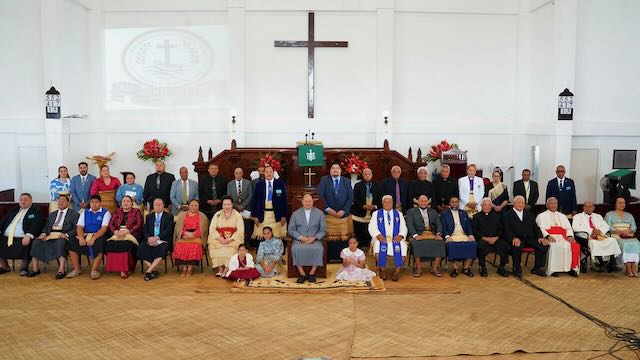 In 2026 Tonga celebrated 200 years of the arrival of Christianity into the Kingdom. The national commemorations, held between 23 June and 2 July 2026, brought together the Royal Family, church leaders, government representatives, members of the diplomatic corps and thousands of worshippers from across the Kingdom and throughout the Tongan diaspora. Organised by the Free Wesleyan Church of Tonga under the theme “Gathering Together to Praise the Lord Jesus Christ as Tonga Enters Its Second Century of Christianity,” the celebrations were both a thanksgiving for the past and a reaffirmation of faith for the future.
The highlight came on 26 June 2026 when His Majesty King Tupou VI preached before an estimated congregation of 10,000 people at the historic Centenary Church in Nukuʻalofa. Broadcast throughout the Kingdom and overseas, the service united Tongans around the world in a shared celebration of faith and national identity.
Throughout the ten-day programme, choirs occupied centre stage. Fourteen choirs performed during a Bicentennial Thanksgiving Choral Evening, while later in the celebrations choirs representing different Christian denominations sang simultaneously at seventeen venues across Tongatapu. Villages spent months preparing for the occasion, decorating churches and homes, erecting ceremonial gateways and welcoming thousands of relatives returning from New Zealand, Australia, the United States and elsewhere. Seven commemorative plaques were unveiled at historic mission sites, including Haʻatafu, where the missionaries whose work permanently established Christianity in Tonga first landed in 1826.
The Importance of Faith in Tongan Society
 Faith in Tonga extends beyond individual belief and is closely linked to community, tradition, and daily life. Churches serve as important centres of social cohesion, education, and support, often playing a leading role in village life and national events.
Sunday is widely observed as a day of rest and worship across the Kingdom, with most businesses closed and a general pause in public activity. While essential services, including transport and airports, continue to operate, the day retains a distinctly quiet and reflective character, with families gathering and communities attending church services.
Religious values also influence national life, including education, public ceremonies, and civic responsibility. Prayer and religious observance are integral to state occasions, reinforcing the connection between faith, tradition, and governance.
A particularly striking feature of religious life in Tonga is the tradition of church choirs. Choral singing is of an exceptionally high standard and forms a central part of worship across denominations. The harmonies, often sung without instrumental accompaniment, are both technically accomplished and deeply moving, and are widely regarded as one of the most distinctive and inspiring elements of Tongan cultural and spiritual expression. For both locals and visitors, the magnificence of church choirs and bands is an experience not to be missed when visiting the Kingdom quintessentially Tongan.
Principal Christian Denominations
Tonga’s religious landscape is characterised by a number of established Christian denominations, each contributing to the spiritual and social fabric of the Kingdom.
Listed broadly in order of the number of adherents:
Free Wesleyan Church of Tonga
A Protestant church in the Methodist tradition, and historically the largest denomination in Tonga. It is closely associated with the introduction of Christianity to the Kingdom and has long-standing links with the Royal Family and national life.
Principal place of worship: Free Wesleyan Centenary Church, Nukuʻalofa (Tongatapu).
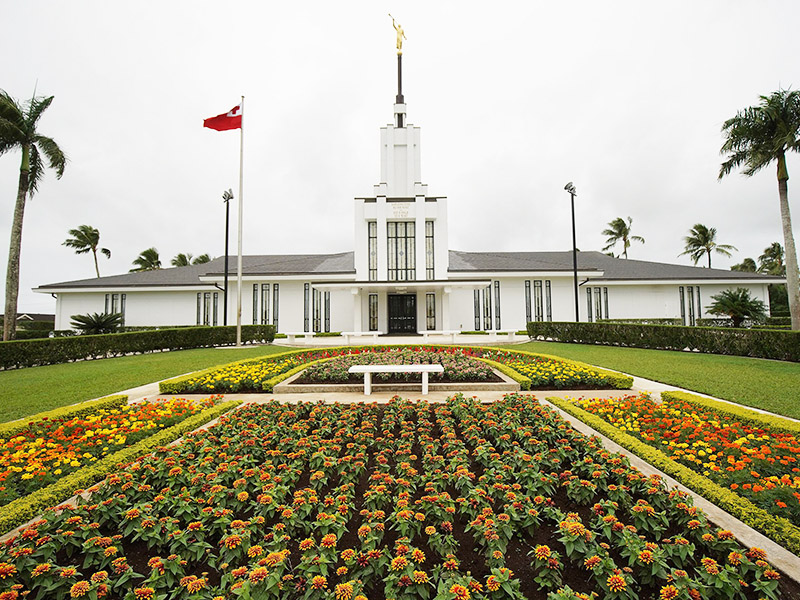
The Church of Jesus Christ of Latter-day Saints
A Christian church with a significant presence in Tonga, particularly known for its emphasis on family life, education, and community organisation.
Principal centres of worship: Chapels throughout the Kingdom, with major centres on Tongatapu, including the Liahona area.
Roman Catholic Church
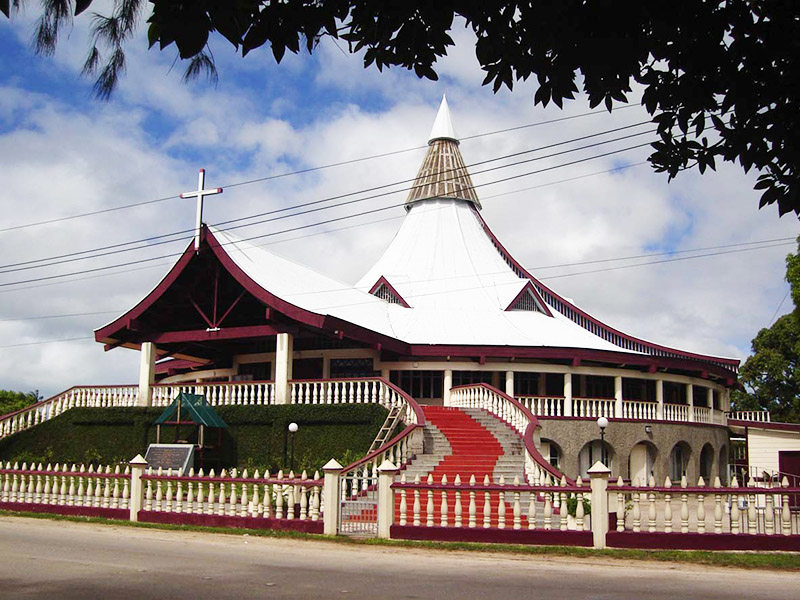
A longstanding Christian community in Tonga with an established diocesan structure. In 2015, Pope Francis appointed Bishop Soane Patita Paini Mafi as the first Cardinal from Tonga a notable moment of international significance for the Kingdom.
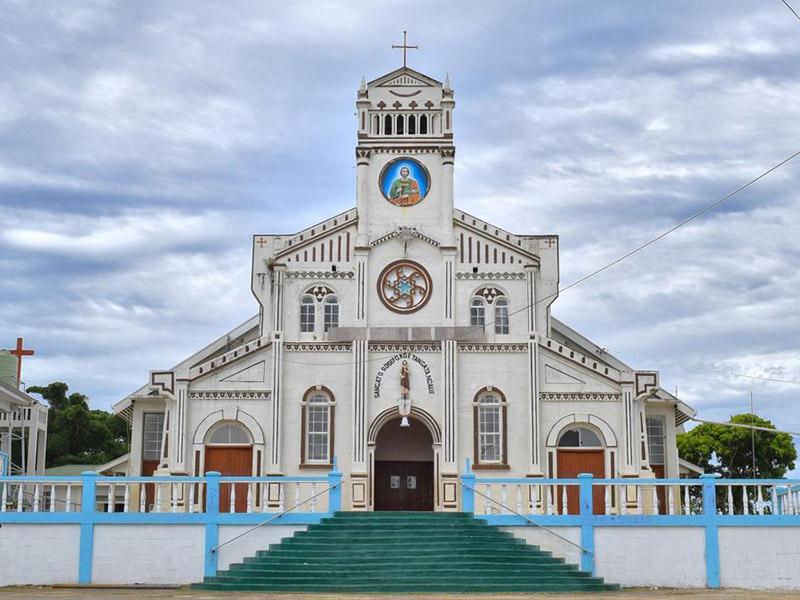
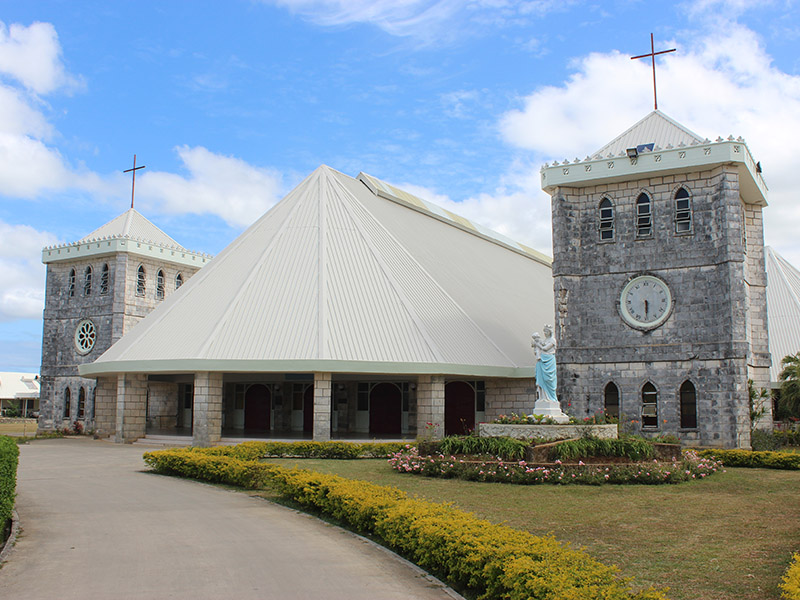
Principal places of worship: Cathedral of the Immaculate Conception (St Mary’s Cathedral), Maʻufanga (Tongatapu); Basilica of St Anthony of Padua, Nukuʻalofa; St Joseph’s Cathedral, Neiafu (Vavaʻu).
Free Church of Tonga
A Protestant denomination that separated from the Free Wesleyan Church in the late 19th century.
Principal places of worship: Established parish churches across Tongatapu and the outer islands.
Seventh-day Adventist Church
A Protestant denomination active in education, healthcare, and community life.
Principal places of worship: Churches and mission centres across Tongatapu and the outer islands.
Church of Tonga
A smaller Protestant denomination with a continuing local presence.
Principal places of worship: Parish churches primarily on Tongatapu and in selected island communities.
Religious Freedom and Other Faith Communities
While Tonga is overwhelmingly Christian, the Constitution provides for freedom of religion, and other faith communities are present within the Kingdom.
According to the 2021 Population and Housing Census of Tonga, around 2% of the population identifies as having no religion.
Small communities of other faiths exist, largely within expatriate and business communities:
Islam
A small Muslim community is present in Tonga. There is no major, purpose-built mosque, and worship generally takes place in informal or community settings.
Hinduism
A small Hindu community exists, with religious observance typically conducted within private or community environments.
Judaism
There is no established Jewish community or synagogue in Tonga. Religious practice, where present, is generally private.
Other faiths
Individuals of other religious traditions may also be present, practicing privately.
Tonga’s constitutional framework guarantees freedom of religion, while the broader social and cultural environment remains strongly shaped by its Christian identity.
Religious Sites and Heritage
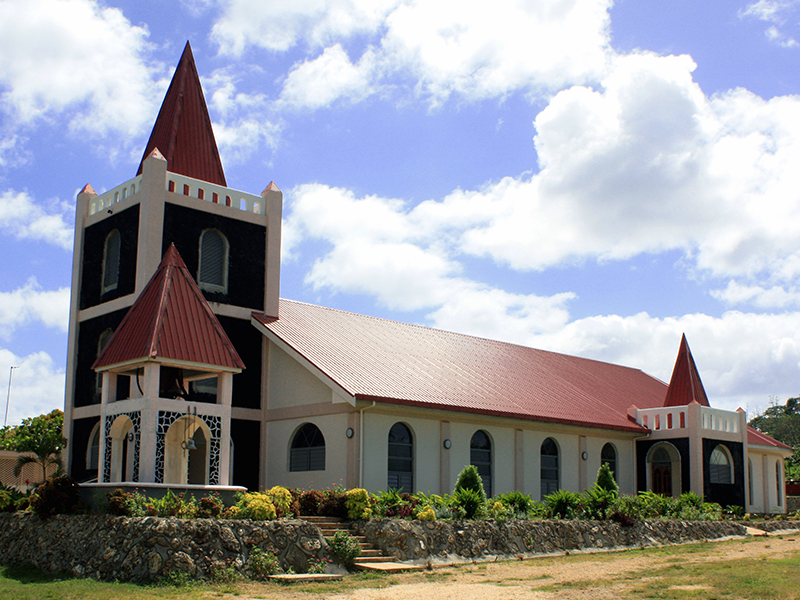
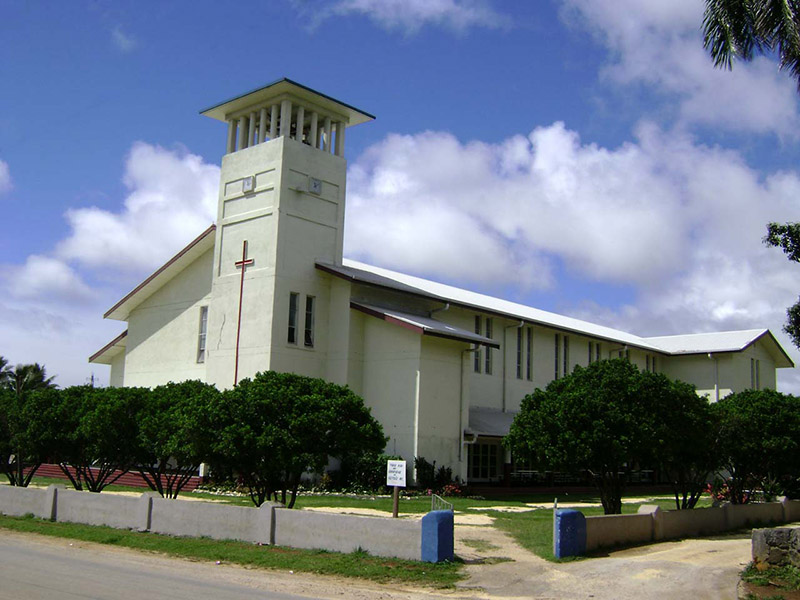
Places of worship in Tonga are not only centers of faith but also important cultural and historical landmarks. Visitors to the Kingdom will encounter numerous churches across the islands, many of which are architecturally significant and central to community life.
Notable sites include:
* Free Wesleyan Centenary Church, Nukuʻalofa (Tongatapu)
* Basilica of St Anthony of Padua, Nukuʻalofa (Tongatapu)
* St Mary’s Cathedral, Maʻufanga (Tongatapu)
* St Joseph’s Cathedral, Neiafu (Vavaʻu)
* Churches across Haʻapai and the outer islands
These sites offer visitors not only an insight into religious practice but also into the history, identity, and communal life of Tonga.
Faith and National Identity
Tonga’s identity as a Christian nation is reflected in its Constitution and in the strong relationship between faith, the Royal Family, and national tradition. Religious observance is not only a personal matter but a shared cultural experience that reinforces unity, respect, and continuity across generations.
The enduring role of faith continues to shape Tonga’s social values, emphasising community, respect for tradition, and a strong sense of moral responsibility.
For both locals and visitors, the magnificence of Tongan church choirs and brass bands is an experience not to be missed. The richness of the harmonies, the dignity of the liturgy, and the sense of community make Sunday worship something deeply moving.
It is quintessentially Tongan.