

The History of the Kingdom of Tonga
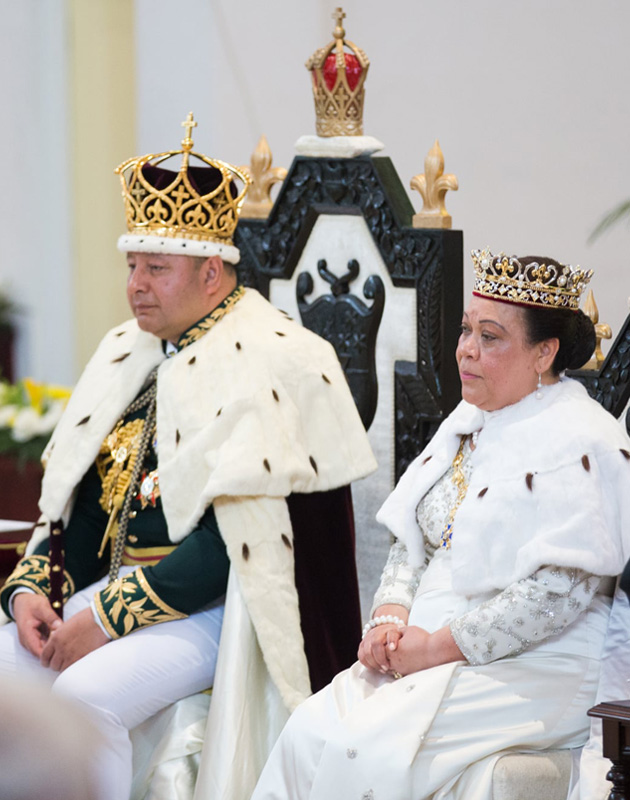
The South Pacific only indigenous reigning Monarchy
More than a 1,000 years ago, Tongan rulers created a hierarchical system of monarchy very similar to that of European dynasties. The structure included commoners, nobility and above all royalty, with the royal title passed down from father to eldest son. This patrilineal mode of succession continues in modern times.
Today’s Tongan monarchy remains an influential and powerful entity in the modern Kingdom, although one of the more contemporary monarchs, King George Tupou V, introduced significant concessions to accommodate a more democratic state.
The present monarch is His Majesty King Tupou VI who succeeded to the Throne in 2012.
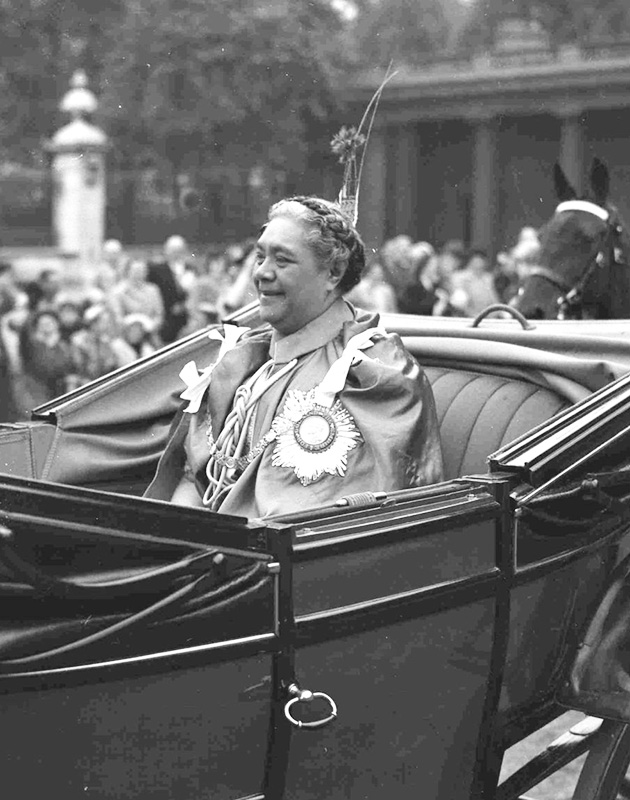
Historically, one of the most loved and globally admired members of the Tongan Royal Family was Her late Majesty Queen Salote Tupou III (reigned 1918 – 1965). Her choice to show respect by sitting in an uncovered carriage in pouring rain at the 1953 Coronation of Britain’s Queen Elizabeth II in London made her famous around the world.
Tonga’s transition to parliamentary democracy
The Kingdom of Tonga has transformed over time from an absolute monarchy to a constitutional and parliamentary monarchy, grounded in one of the Pacific’s earliest written constitutional traditions. Tonga adopted a written Constitution in 1875, becoming the first country in the Pacific to do so. In 2025, the Kingdom marked the 150th anniversary of this Constitution with national celebrations, public ceremonies, and keynote speeches reflecting on constitutional continuity, sovereignty, and democratic development.
For much of Tongan history, executive authority rested largely with the monarch. Significant democratic reform gathered momentum in the early twenty-first century, with His late Majesty King George Tupou V (reign 2006-2012) playing a decisive role by voluntarily advancing constitutional change. Reforms implemented by 2010 transferred executive power to a Cabinet accountable to the Legislative Assembly, establishing a parliamentary system in which the Prime Minister is elected by Parliament and only then formally appointed by the Sovereign.
Today, Tonga functions as a parliamentary democracy within a constitutional monarchy. The Legislative Assembly is composed of representatives elected by the people alongside representatives of the nobility. Lord Fatafehi Fakafānua, who served two terms as Speaker of the Legislative Assembly (2014–2017 and 2021–2025), was elected in the November 2025 general election and subsequently elected by the Assembly and later appointed by His Majesty King Tupou VI as Tonga’s 20th Prime Minister.
In December 2025 His Majesty King Tupou VI formally broke ground on a new parliamentary complex for the Kingdom, symbolising resilience, democratic continuity, and national renewal. Tonga’s original Parliament House was destroyed by Cyclone Gita in February 2018.

Polinesian Beginnings
Around 3,000 years ago, the Lapita people from Southeast Asia migrated west via the Malay peninsula and the remote islands of the East Indies to settle in the scattered and pristine islands of the South Pacific.
In Tonga, these original ancestors of today’s Polynesian people founded settlements at Toloa – near the present-day location of Fua’amotu International Airport – and at Heketa, on the northeastern edge of Tongatapu.
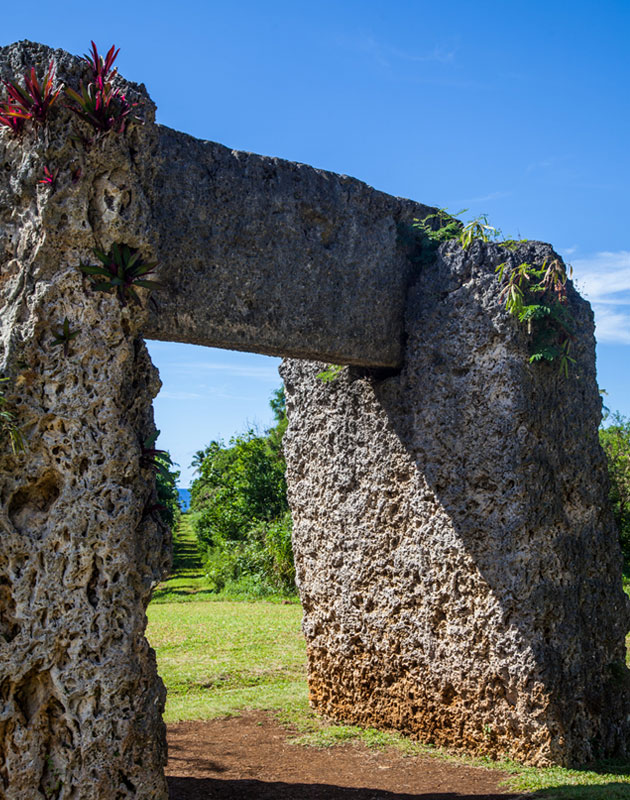
Three millennia later, reminders of these ancient times are dotted throughout the islands. The fascinating Ha’amonga a Maui trilithon still stands as an imposing legacy of early Tongan ingenuity.
Eventually settling in the far-flung island groups of the Kingdom’s archipelago, these early ancestors also developed a distinctive culture that still underpins traditional Tongan life in more contemporary times.
Two Cultures
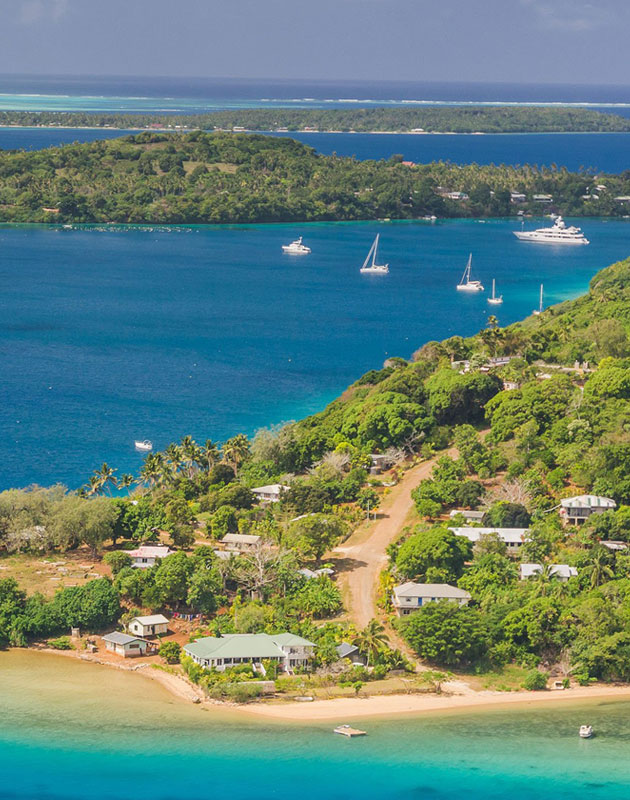
The northern island group Vava’u was discovered in 1781 by Spanish navigator, Don Francisco Antonio Mourelle, commander of the ship La Princesa. Mourelle named Vava’u’s well-protected harbour Port of Refuge, and claimed the beautiful islands in the name of Spain.
Over ensuing years early traders continued to visit Tonga and tensions grew between Europeans and Tongans. In 1806, this disquiet culminated in the ransacking of the ship the Port-au-Prince in Lifuka in the Ha’apai island group. With the exception of a young cabin boy named William Mariner, the entire crew was killed. The lad was nurtured by Chief Finau in Lifuka for four years, learning the Tongan language and becoming immersed in the Kingdom’s tradition and protocol.
Mariner’s book “An Account of the Natives of the Tongan Islands” is now recognised as a significant insight into early Tongan life, customs and culture.
Another navigator to visit Tongan waters was Captain William Bligh, and Fletcher Christian’s infamous mutiny of the HMS Bounty actually occurred near the volcanic island of Tofua in the Ha’apai group.
First European Contact
Initial European contact with Tonga came in 1616, when the Dutch navigators Wilhelm Schouten and Jacob Le Maire discovered the Niuas, the small northern most islands of the Tongan archipelago.
Contact with the local Niuas islanders was restricted to a minor altercation with a Tongan canoe.
In 1643, the Dutch extended their exploration when Abel Tasman visited the Tongan Islands of ‘Ata, ‘Eua and the largest island of Tongatapu.
Unlike the first Dutch contact further north in 1616, Tasman’s ships the Heemskerck and the Zeehaen stopped for water and replenishments, and Tasman also traded with the local communities.
Captain James Cook
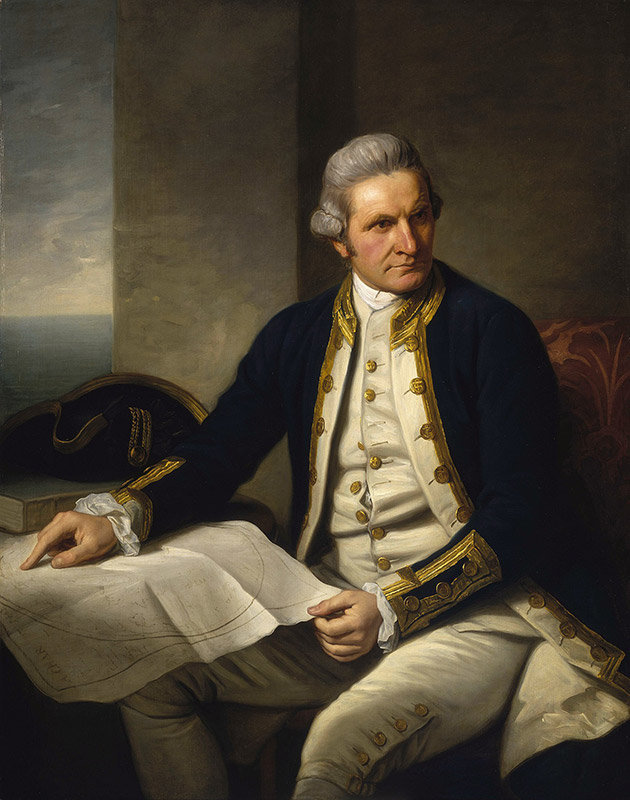
In 1773, the British explorer and navigator Captain James Cook visited Tonga’s southern islands of Tongatapu and ‘Eua.
He returned in 1777 and spent two months exploring and charting the Tongan archipelago, using his legendary skill as a cartographer producing accurate charts still in regular use until recent times. During this voyage, a lavish feast for Cook and his men was presented by Chief Finau in the village of Lifuka in the Ha’apai island group.
Cook was so impressed by Tongan hospitality that he dubbed Tonga the ‘Friendly Isles’, not realising the amiable and social nature of the locals who actually concealed a plan to raid his boats and kill Cook and his crew.
The conspiracy was only foiled at the eleventh hour, after a dispute between Finau and other village nobles, and Cook sailed away oblivious of his intended fate.
Ironically his positive and complementary name for the Kingdom of Tonga remains in common use.
Treaty of Friendship
Tonga has had its longest formal diplomatic relations with the United Kingdom with which it remains on very good terms today. The Kingdom of Tonga establish formal mutual recognition in 1879.
Whilst always remaining independent, Tonga became a British protected state under the so-called Treaty of Friendship of 18 May 1900. This protected the Tongan monarchy and state from other European or other colonising powers in return for a special relationship with Britain.
In the 1950’s Anglo-Tongan relations were strengthened with the visit of each countries’ monarch to the other state. In 1953 Tonga‘s Queen Salote Tupou III became the first Tongan monarch to visit Britain where she attended the coronation of Queen Elizabeth II.
Historically, Queen Salote III was one of the most loved and globally admired members of the Tongan Royal Family. Her choice to show respect by sitting in an uncovered carriage in pouring rain at the 1953 Coronation of Britain’s Queen Elizabeth II in London made her famous around the world.
In 1954 Queen Elizabeth II returned the courtesy by visiting Tonga in 1970 and 1977. The strength of relations between Tonga and Britain remain strong with both countries maintaining diplomatic missions in each others capitals.
In 2023 Their Majesties King Tupou VI and Queen Nanasipau’u of Tonga attended the Coronation of Their Majesties King Charles III and Queen Camilla of Great Britain in London.
3000 Years of History
The Kingdom of Tonga’s history stretches back over 3000 years, beginning with the migration of the Lapita people from the mainland and islands of Southeast Asia.
Both Tonga’s culture and customs began with these earliest of Polynesians, and many ancient traditions have continued respectfully through to the present day.
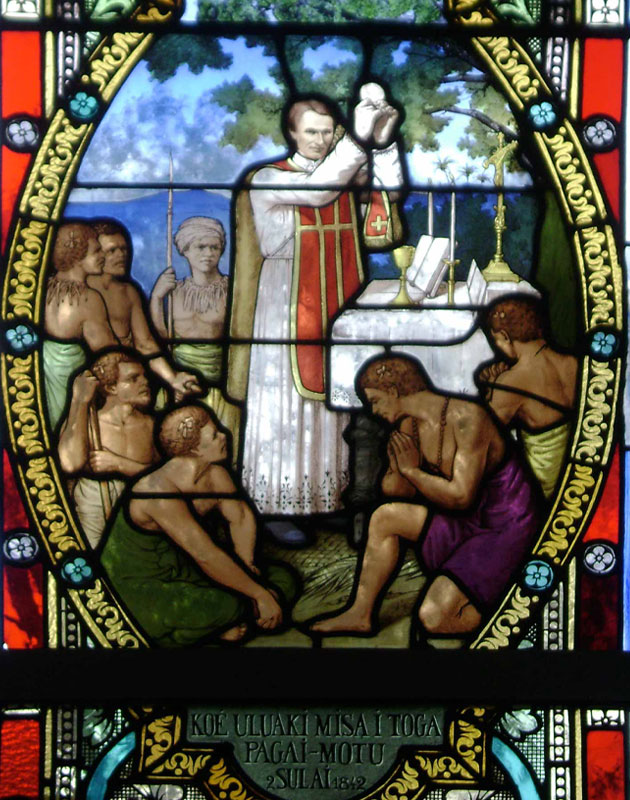
The arrival of European explorers and navigators from the 17th century saw the introduction of Christianity, now an integral part of the modern Kingdom of Tonga.
Experiencing the beautiful harmonies filling Tongan churches every Sunday is an essential experience for all visitors to the Kingdom.
Throughout the ensuing centuries, Tonga’s authentic culture has continued to be respected and maintained across the pristine islands of this Polynesian archipelago.
The Kingdom of Tonga Today
The Treaty of Friendship and protected status ended with the modification of the treaty in July 1970 when Tonga resumed responsibility for its own external affairs. Tonga is unique among Pacific island nations in never having been colonised. It’s foreign relations therefore have always been as an independent monarchy free of the colonial relationships with its neighbours.
Tonga has been a member of the Commonwealth of Nations on 4 June 1970 the same date that the United Kingdom, Australia and New Zealand established formal diplomatic relations closely followed by many other countries across the world. Diplomatic relations with Portugal were established in 2008.
Since 2020 formal diplomatic relations have been established with many countries including Ireland, Saudi Arabia, Romania, Qatar, Dominican Republic, Vietnam, Nepal, Rwanda, Oman, Uruguay, Latvia, Kuwait, Romania, Austria, Qatar, Kosovo, Dominica, Lithuania and San Marino.
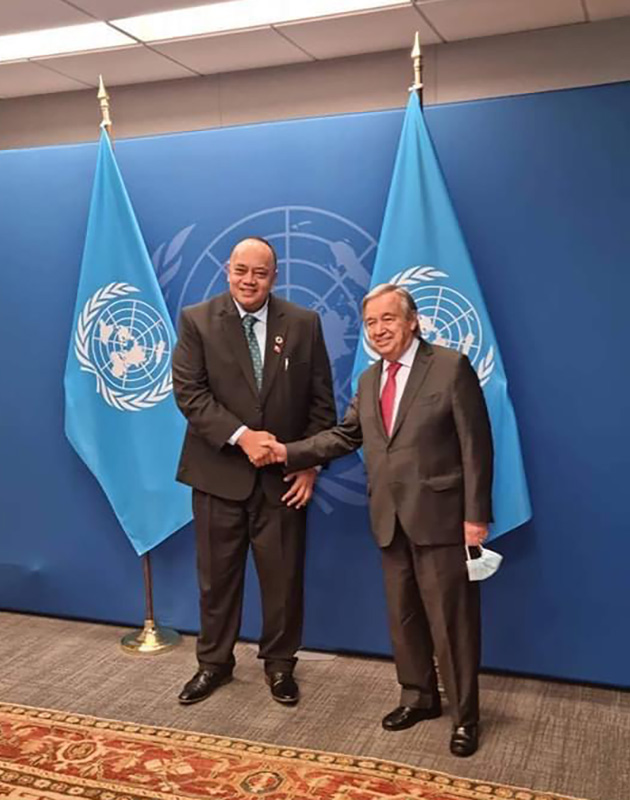
Tonga was admitted to the United Nations in 1999.
Tonga maintains strong regional ties in the Pacific and is a full member of the Pacific Islands Forum which held in 2024 its 53rd Pacific Islands Forum Leaders Meeting in Tonga under its chairmanship.